
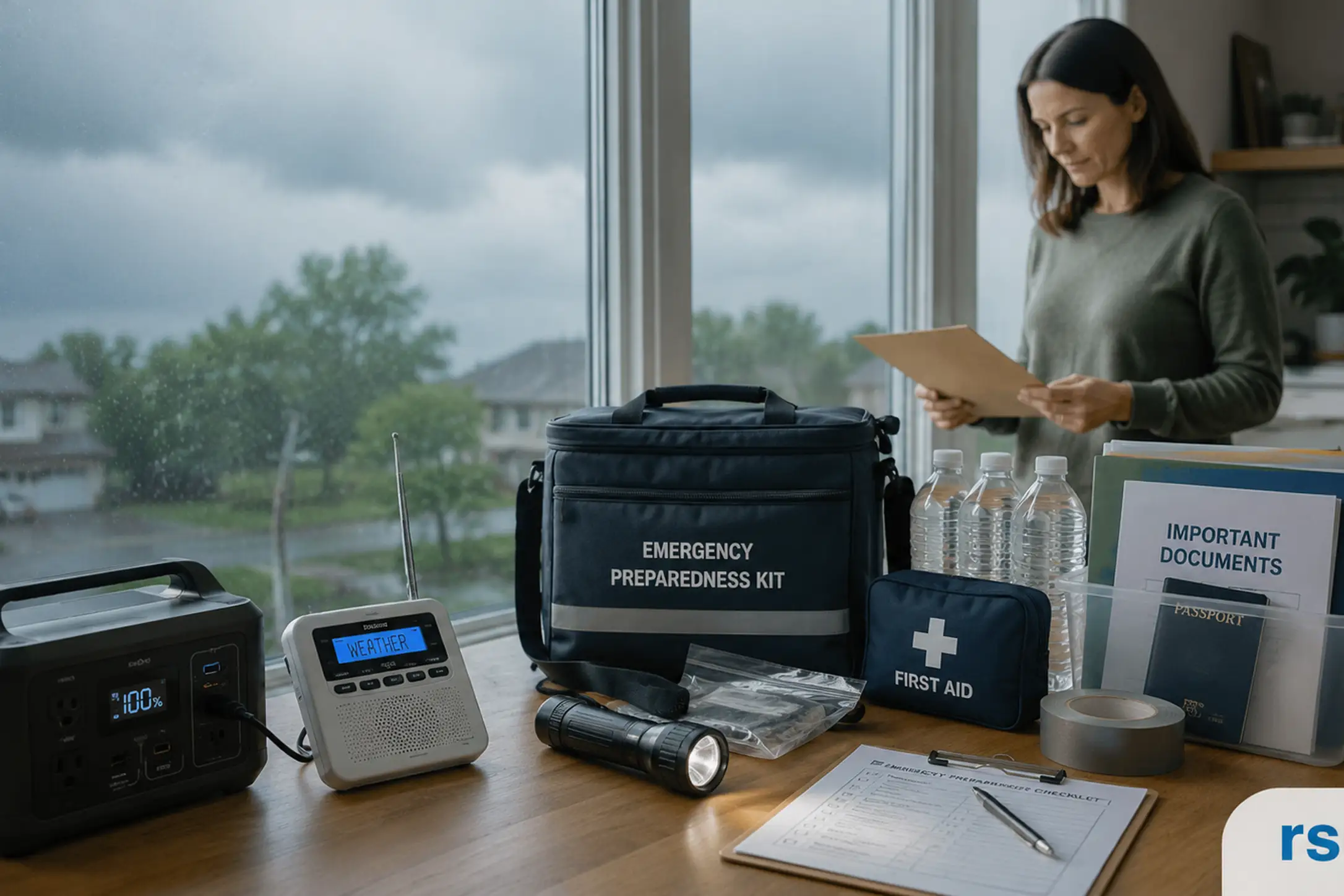
A commercial flood response plan should tell people what to do before conditions become unsafe

Commercial & institutional resilience

A commercial flood response plan should tell people what to do before conditions become unsafe.

Build a commercial flood emergency response plan with triggers, roles, communications, shutdowns, access control and recovery handoff.

  • Ontario depth
  • Canada-wide learning
  • Standards-informed
  • Risk reduction, not guarantees

The practical answer

Start with the property, the operations and the consequence.

A useful response plan converts warnings and abnormal conditions into timely actions. It defines who monitors, who can close areas or stop operations, who communicates, and when staff must withdraw rather than attempt property protection.

System view

Four areas that should be reviewed together

Each area needs a defined purpose, owner, evidence trail and review cycle.

01

Warnings And Action Triggers

A useful response plan converts warnings and abnormal conditions into timely actions. It defines who monitors, who can close areas or stop operations, who communicates, and when staff must withdraw rather than attempt property protection.

02

Decision Authority And Backups

A useful response plan converts warnings and abnormal conditions into timely actions. It defines who monitors, who can close areas or stop operations, who communicates, and when staff must withdraw rather than attempt property protection.

03

Occupant And Vendor Communication

A useful response plan converts warnings and abnormal conditions into timely actions. It defines who monitors, who can close areas or stop operations, who communicates, and when staff must withdraw rather than attempt property protection.

04

Safety Boundaries And Withdrawal

A useful response plan converts warnings and abnormal conditions into timely actions. It defines who monitors, who can close areas or stop operations, who communicates, and when staff must withdraw rather than attempt property protection.

Guidance 1

Warnings And Action Triggers

A useful response plan converts warnings and abnormal conditions into timely actions. It defines who monitors, who can close areas or stop operations, who communicates, and when staff must withdraw rather than attempt property protection.

For this topic, the organization should identify official warning and site monitoring sources. The decision should be recorded with the responsible owner, evidence used, limitations, review date and any need for qualified technical, legal, insurance or municipal advice.

Commercial resilience depends on connected decisions. Building systems, site drainage, occupancy, maintenance, emergency response, continuity and capital planning should not be evaluated as isolated programmes.

Commercial stormwater and flood resilience guidance for warnings and action triggers

Guidance 2

Decision Authority And Backups

A useful response plan converts warnings and abnormal conditions into timely actions. It defines who monitors, who can close areas or stop operations, who communicates, and when staff must withdraw rather than attempt property protection.

For this topic, the organization should define phased triggers and decision authority. The decision should be recorded with the responsible owner, evidence used, limitations, review date and any need for qualified technical, legal, insurance or municipal advice.

Commercial resilience depends on connected decisions. Building systems, site drainage, occupancy, maintenance, emergency response, continuity and capital planning should not be evaluated as isolated programmes.

Commercial stormwater and flood resilience guidance for decision authority and backups

Guidance 3

Occupant And Vendor Communication

A useful response plan converts warnings and abnormal conditions into timely actions. It defines who monitors, who can close areas or stop operations, who communicates, and when staff must withdraw rather than attempt property protection.

For this topic, the organization should prepare role-based action cards. The decision should be recorded with the responsible owner, evidence used, limitations, review date and any need for qualified technical, legal, insurance or municipal advice.

Commercial resilience depends on connected decisions. Building systems, site drainage, occupancy, maintenance, emergency response, continuity and capital planning should not be evaluated as isolated programmes.

Commercial stormwater and flood resilience guidance for occupant and vendor communication

Implementation workflow

Move from concern to governed action

A useful commercial workflow identifies decisions, accountabilities and verification rather than producing an isolated report.

  1. 1

    Identify Official Warning And Site Monitoring Sources

    Assign an accountable owner, document the evidence and define what completion and verification will look like.

  2. 2

    Define Phased Triggers And Decision Authority

    Assign an accountable owner, document the evidence and define what completion and verification will look like.

  3. 3

    Prepare Role Based Action Cards

    Assign an accountable owner, document the evidence and define what completion and verification will look like.

  4. 4

    Coordinate Shutdown, Access And Communications

    Assign an accountable owner, document the evidence and define what completion and verification will look like.

  5. 5

    Exercise Realistic Scenarios Safely

    Assign an accountable owner, document the evidence and define what completion and verification will look like.

  6. 6

    Handoff Records And Lessons To Recovery

    Assign an accountable owner, document the evidence and define what completion and verification will look like.

Readiness check

Use this page as a working review

Selections are stored only in this browser session and are not submitted to RSM.

0 of 6items reviewed

Common failure points

Avoid incomplete planning

  • Waiting For Unavailable Senior Approval
  • Sending Staff Into Unsafe Conditions
  • Using One Communication Channel
  • Ending The Plan At Evacuation
Commercial building systems being inspected and documented

Connected pathways

Continue with the next useful decision

Frequently asked questions

Questions organizations commonly ask

Is response the same as continuity?

No. Response focuses on immediate safety and control; continuity focuses on maintaining and restoring critical operations.

Who monitors flood information?

Assign a primary and backup using municipal, conservation authority, provincial and weather sources relevant to the site.

Should staff try to stop every water entry?

No. Safety and withdrawal criteria take priority over property protection.

How often should the plan be exercised?

Use a risk-based schedule and exercise after major changes, incidents or weaknesses.

Official source basis

Use current public and professional requirements

RSM summarizes concepts for education. Confirm design, legal, insurance, code, permit, funding and emergency requirements with the responsible authority or qualified professional.

Next step

Turn commercial flood-resilience knowledge into an owned programme.

Connect the building, site, people, records and investment decisions through one accountable pathway.

Published: July 19, 2026   Last reviewed: July 19, 2026

Prepared by Regional Stormwater Management for public and professional education. RSM does not certify buildings, guarantee flood prevention, determine insurance coverage or replace engineering, legal, municipal or emergency advice.