
Confirm the backup pathway
A valve addresses reverse flow in the protected drainage path, not every groundwater or surface-water problem.
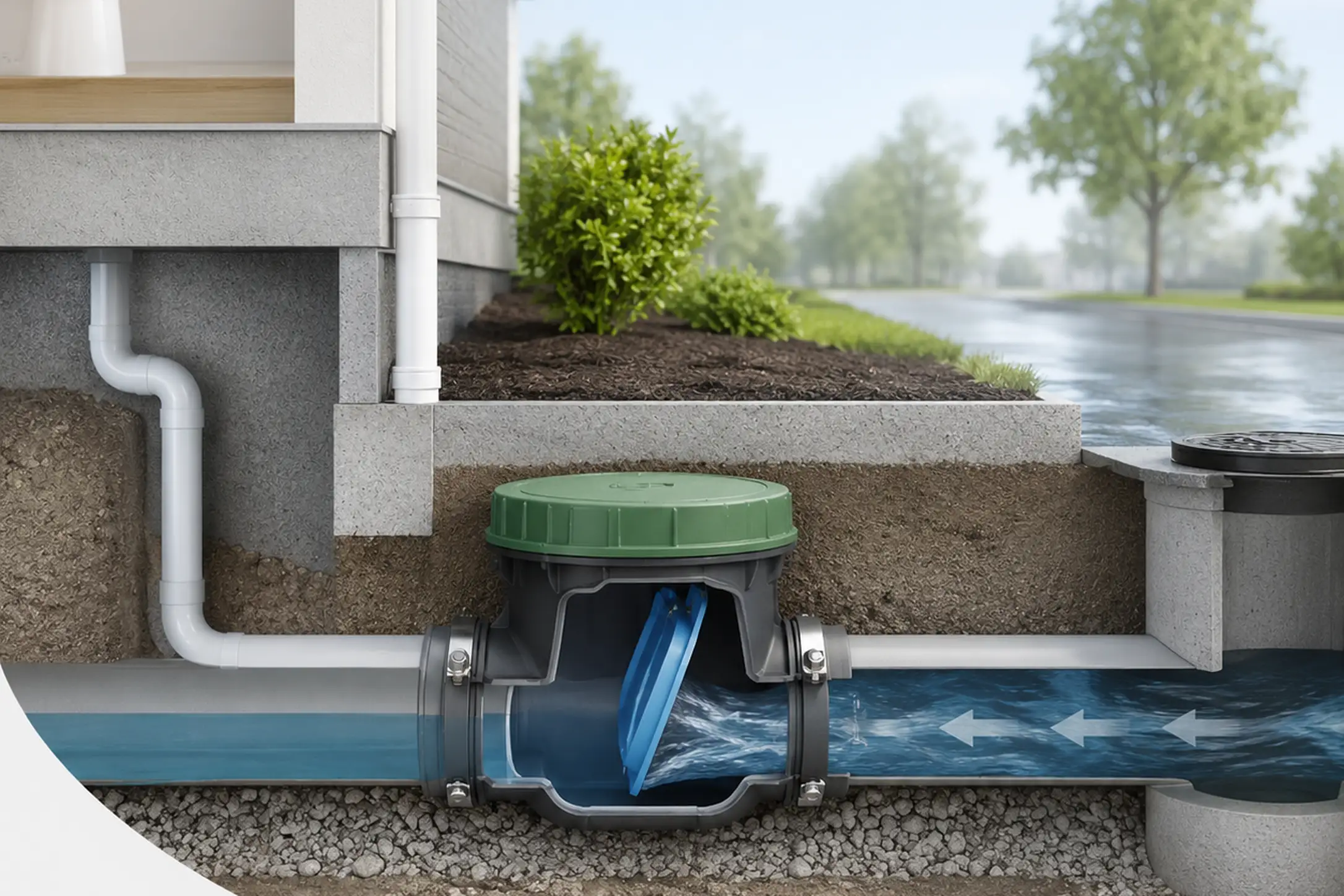
Sewer-backup protection
Backwater valves can reduce specific sewer-backflow risk when selected, installed, used and maintained correctly.
Who this is for
Independent education and standards-informed practice guidance.
Law, code, municipal rules, permits, manufacturer instructions and qualified professional decisions remain controlling.
Owners, designers, contractors, inspectors and authorities retain assigned duties.
Core principles
A valve addresses reverse flow in the protected drainage path, not every groundwater or surface-water problem.
Type and location must respect applicable plumbing requirements.
Inspection, cleaning and replacement need permanent access.
Users need activation, fixture-use, alarm and maintenance instructions.
Practice detail
Review drainage arrangement, protected fixtures, sewer type, cleanouts, subsoil drainage and permit requirements. National model-code material provides context, while Ontario projects must follow the applicable Ontario Building Code and local authority.
Practice detail
Record make, model, size, direction, location, protected branch or drain, access and inspection. Verify operation by an approved safe method and document connected fixtures that need special use instructions.
Practice detail
Inspect and clean at the interval required by the product, authority and risk, and after suspected activation. Keep access free. A valve can be obstructed or damaged, and occupants may need to limit wastewater discharge while it is closed.
Working sequence
Confirm sewer-backup risk.
Review drainage and requirements.
Select accessible equipment.
Verify installation and scope.
Maintain and communicate limits.
Avoidable failures
Related pathways
Official and institutional references
RSM summarizes concepts for education. Use current official documents, local authorities and qualified professionals for project decisions.
Frequently asked questions
No. It addresses reverse flow in a protected drainage path.
No. Location and design must suit the drainage arrangement and requirements.
The valve must be inspected, cleaned and repaired.
Users may need to limit discharge because flow cannot leave through a closed valve.
Standards-informed practice
Connect knowledge with competent roles, approvals, records, inspection, maintenance and transparent communication.
Published: July 19, 2026 Last reviewed: July 19, 2026
RSM provides independent educational and standards-informed guidance. Confirm current legal, code, municipal, professional, product and project requirements with the appropriate authority and qualified people.
Next steps
Move from a single topic to the wider guidance, evidence and feedback process.