
Understand collection
Confirm what drains to the sump and whether pit and piping support the purpose.
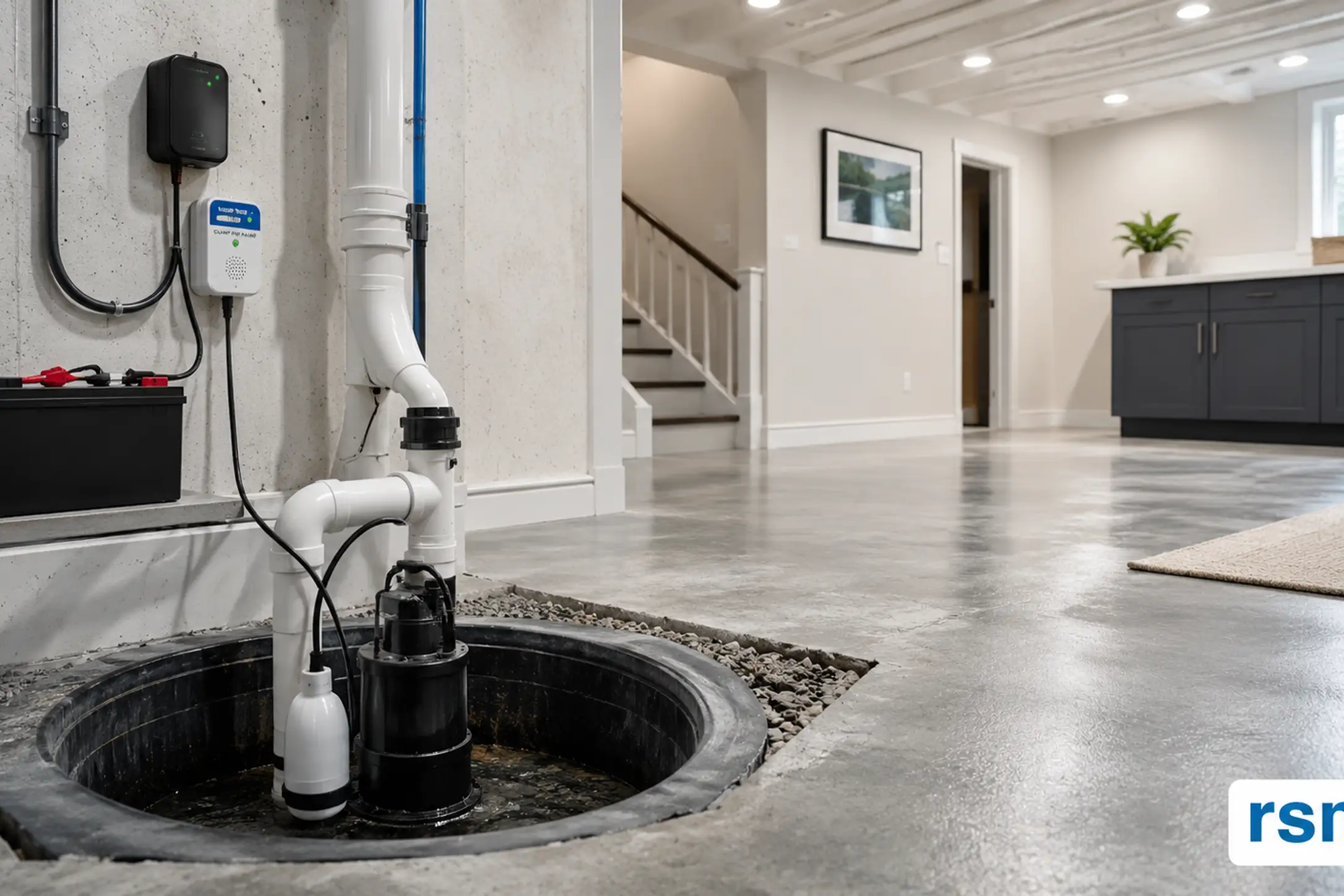
Foundation drainage
A sump pump is one component in a system that depends on reliable collection, capacity, discharge, power, alarms and maintenance.
Who this is for
Independent education and standards-informed practice guidance.
Law, code, municipal rules, permits, manufacturer instructions and qualified professional decisions remain controlling.
Owners, designers, contractors, inspectors and authorities retain assigned duties.
Core principles
Confirm what drains to the sump and whether pit and piping support the purpose.
Prevent unsafe, prohibited or recirculating discharge.
Use alarms, backup or redundancy proportionate to consequence.
Provide access, labelling, isolation and records.
Practice detail
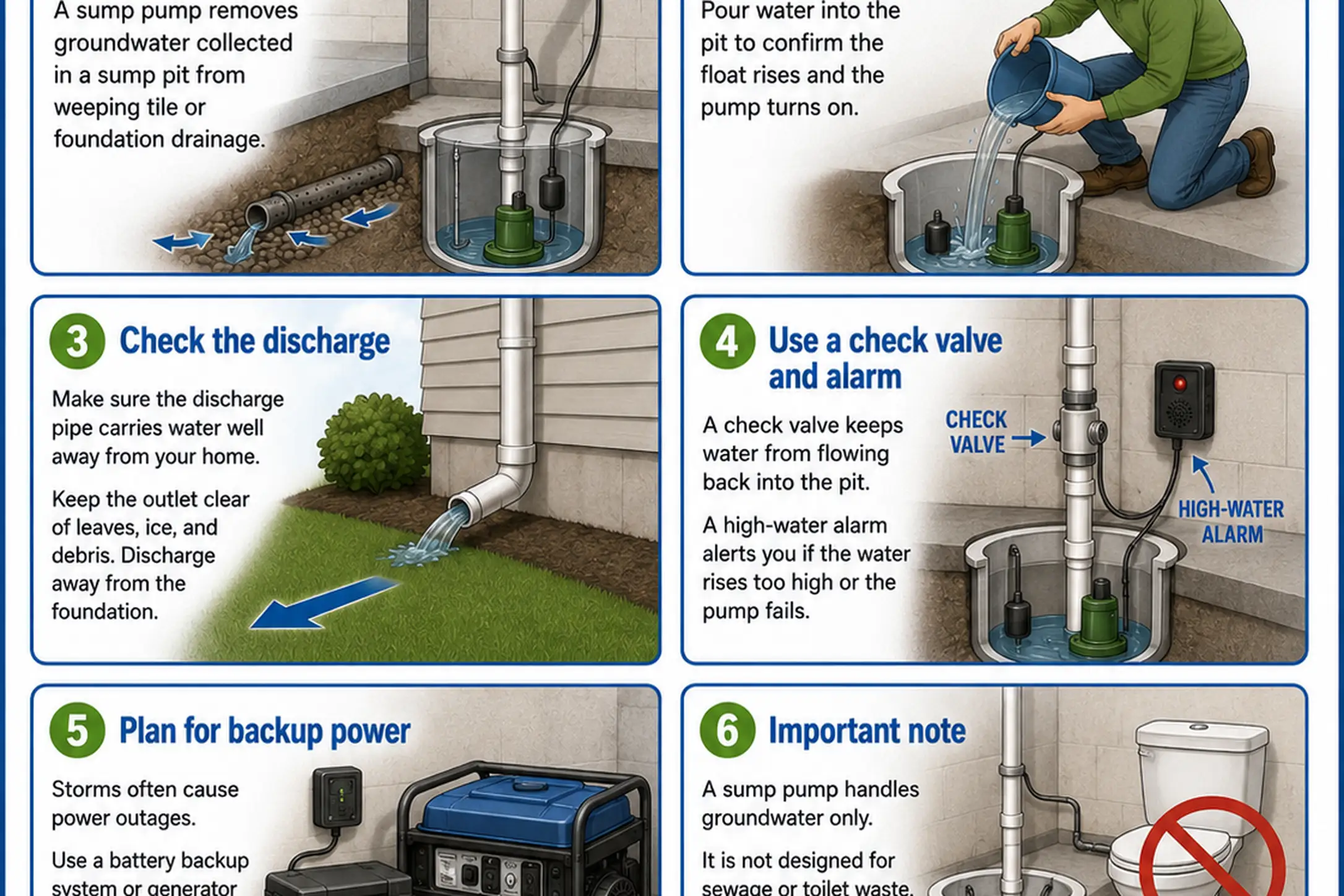
Document water source, pit, pump duty, lift, discharge, expected inflow, cycling and consequence. A larger pump is not automatically better if discharge, power, check valve or pit causes short cycling or cannot handle flow.
Practice detail
Confirm legal and practical discharge, backflow control, support, freeze protection and damage protection. Circuits, receptacles, alarms, chargers and energy storage need electrical approval.
Practice detail
Test water level, pump start and stop, check valve, discharge, alarm, backup and power restoration. Record pump and battery age, results and cycling changes, and investigate unusual operation.
Working sequence
Confirm collection and pathway.
Determine duty and discharge.
Coordinate power, alarm and backup.
Commission the sequence.
Test, maintain and record.
Avoidable failures
Related pathways
Official and institutional references
RSM summarizes concepts for education. Use current official documents, local authorities and qualified professionals for project decisions.
Frequently asked questions
It manages water collected in its pit; sewer-backup protection is separate.
Base backup on outage probability, inflow, consequence and response.
Use required flow at actual head with allowance for duty and cycling.
A condition requiring response, such as high water, power loss or pump failure.
Standards-informed practice
Connect knowledge with competent roles, approvals, records, inspection, maintenance and transparent communication.
Published: July 19, 2026 Last reviewed: July 19, 2026
RSM provides independent educational and standards-informed guidance. Confirm current legal, code, municipal, professional, product and project requirements with the appropriate authority and qualified people.
Next steps
Move from a single topic to the wider guidance, evidence and feedback process.